
In today’s competitive hospitality industry, hotels are under increasing pressure to enhance guest experience while reducing operational costs. Hotel automation has emerged as a powerful solution, integrating advanced technologies such as electronic door locks, energy-saving devices, and smart room systems. These innovations not only improve security and convenience for guests but also help hotel operators achieve greater efficiency and sustainability.
As guest expectations evolve and operating costs continue to rise, hotel owners are turning to automation to stay competitive while protecting long-term profitability.
The Rise of Smart Hotel Automation
Modern travelers expect seamless, secure, and convenient stays. At the same time, hotel owners must manage energy consumption, staffing efficiency, and property security. Hotel automation addresses these challenges by connecting room access, energy control, and management systems into one intelligent ecosystem.
Two of the most impactful components of hotel automation today are electronic door locks and energy-saving devices, both of which deliver immediate operational and financial benefits.
Electronic Door Locks: Security Meets Convenience
Electronic door locks have become a standard feature in modern hotels, replacing traditional mechanical keys with smarter, more secure access solutions.
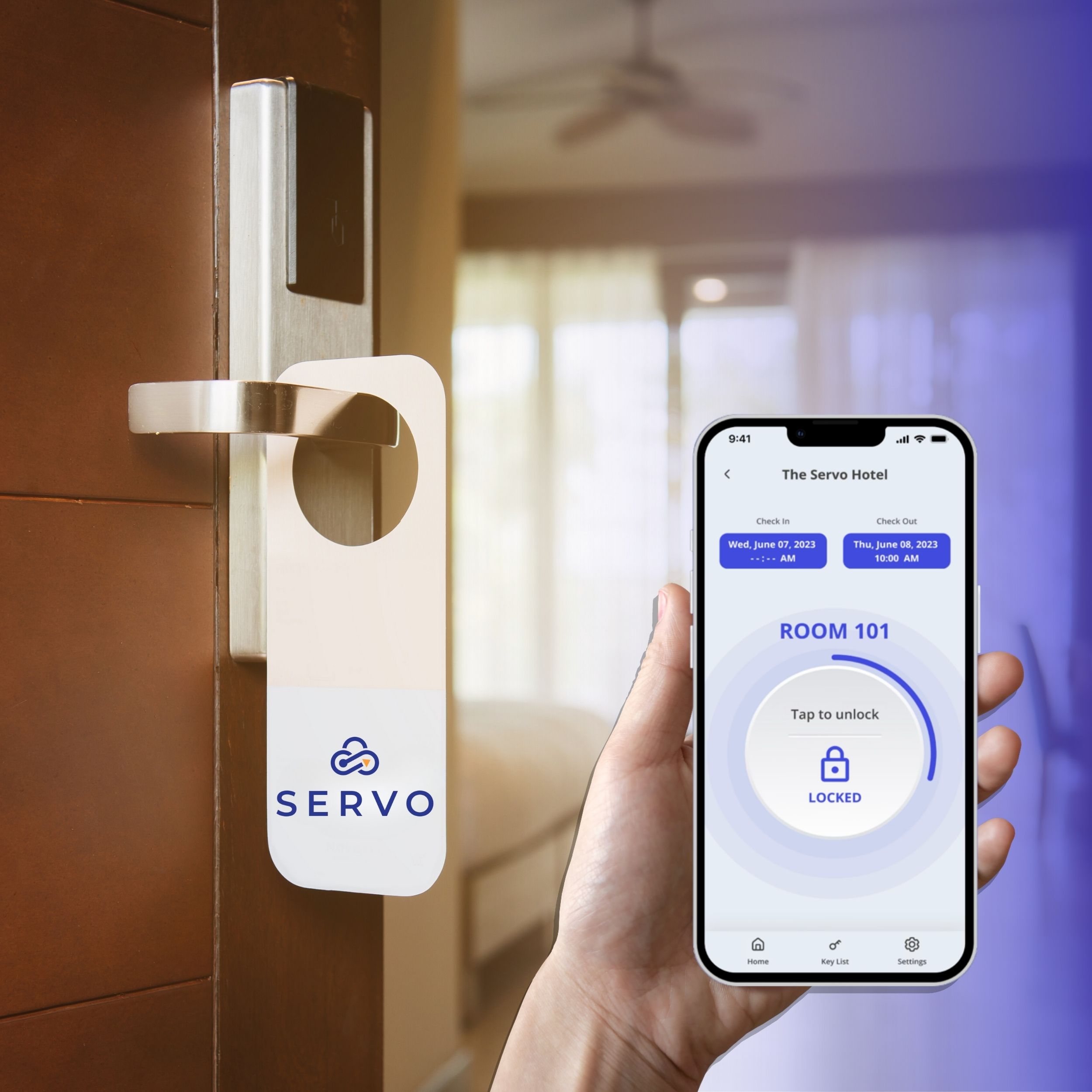
RFID Cards vs. Mobile Keys
RFID card locks remain widely used due to their reliability and ease of implementation. Guests receive a programmed key card that grants access only during their stay, reducing the risk of unauthorized entry.
Mobile keys, on the other hand, allow guests to use their smartphones to unlock rooms. This keyless approach enhances convenience, minimizes physical contact, and supports a more modern guest experience—especially appealing to tech-savvy travelers.
Integration with Property Management Systems (PMS)
When electronic door locks are integrated with a hotel’s PMS, room access is automatically linked to check-in and check-out times. This eliminates manual key programming errors and improves front desk efficiency. Lost or expired credentials can be instantly deactivated, enhancing overall security.
Key Benefits?
- Improved security: Time-based access and encrypted credentials reduce unauthorized entry.
- Keyless convenience: Faster check-ins and a smoother guest journey.
- Audit trails & access control: Management can track room access activity, supporting accountability and safety.
Energy-Saving Devices: Smarter Power Management
Energy costs represent a significant portion of hotel operating expenses. Energy-saving devices help hotels control consumption without compromising guest comfort.
Key Card Energy Switches
Key card energy switches automatically activate power when a guest inserts their room key and cut off non-essential electricity when the room is vacant. This ensures lights, air conditioning, and other systems are not running unnecessarily.
Key Benefits
- Reduced electricity costs: Prevents energy waste in unoccupied rooms.
- Automatic power cutoff: Ensures efficient energy use without relying on staff intervention.
- Sustainability support: Helps hotels meet environmental goals and appeal to eco-conscious guests.
Operational Benefits for Hotel Owners
Beyond guest-facing improvements, hotel automation delivers measurable operational advantages:
- Lower utility expenses
- Reduced maintenance issues
- Improved control over room access and energy usage
- Better data visibility for informed decision-making
Automation allows hotel owners to manage properties more efficiently while maintaining consistent service quality.
Conclusion
Hotel automation is no longer a luxury—it is a strategic investment. By adopting electronic door locks and energy-saving devices, hotels can enhance security, improve guest satisfaction, and significantly reduce operating costs. For hotel owners looking to future-proof their properties, smart automation offers a clear path toward efficiency, sustainability, and long-term success.
Written by Jeffry Arios, Project Liaison Officer of Servo IT Solutions. A proud member of the Servo team for almost 15 years, Jeff has successfully overseen system implementations in nearly a hundred hotels, resorts, and restaurants nationwide, earning the trust of clients through his experience, leadership, and deep understanding of hospitality operations.